

Sefton Place: From Youth Hostel to Luxury Accommodation
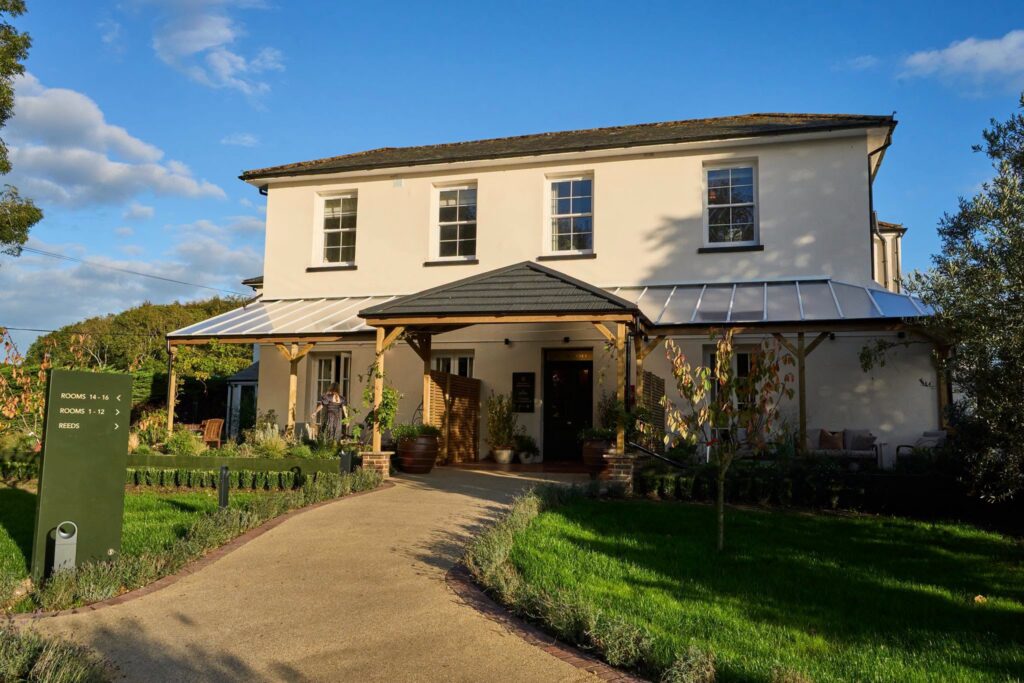
Tucked away in the countryside just outside Arundel, Sefton Place has already lived several lives. Once a grand country house, then a school and wartime hospital, it became an important Youth Hostels Association property after the Second World War. Now, almost 80 years after welcoming its first hostel guests, Sefton Place is entering another chapter with its historic buildings transforming into a new generation of high-quality visitor accommodation.
Sefton Place, at Warningcamp, is around a mile from Arundel, within the South Downs National Park. The setting is quintessentially Sussex: open fields, hedgerows, mature trees and the River Arun winding through the nearby floodplain. The handsome historic building and its grounds make a striking contribution to the rural landscape.
The property’s connection with the Youth Hostels Association began in 1946. During the war, Sefton Place had been used as a hospital, but the YHA was already negotiating to establish a hostel there as early as the publication of its 1945 handbook. The hostel eventually opened in 1946, around Easter-time.
For generations of walkers, cyclists, school groups and young travellers, Sefton Place became a familiar destination. Its scale meant that it could accommodate substantial numbers, and records show that in 1951, the capacity was reduced from 120 beds to 60. Over the following decades, the Victorian manor house was gradually adapted to meet changing expectations. Improvements included better accommodation for staff, new facilities and, in the 1970s, measures to address the building’s famously cold dormitories. Electric heating was eventually installed, contributing to a significant increase in winter bookings.
By the late 1990s, the hostel was changing again. Family rooms with en-suite facilities, a new reception and lounge, and a refreshed colour scheme helped bring the accommodation closer to contemporary expectations. Yet its fundamental character remained that of a large, communal hostel.
The YHA era finally came to an end in 2012, when Arundel Youth Hostel closed. The property was subsequently developed as the Sussex Heritage Centre, retaining its role as visitor accommodation while moving away from the traditional hostel model. Planning documents described the change of use as a heritage centre incorporating guest bedrooms and a manager’s residence.
For guests, the new incarnation offered something quite different. Sefton Place could be hired as a substantial country-house-style venue, with 11 en-suite bedrooms, generous communal spaces, a large dining room, extensive grounds and facilities suited to family celebrations and group stays. Guest reviews highlighted the peaceful setting, spacious rooms, gardens and ability to accommodate large parties, including multigenerational family gatherings and celebrations.
Now another transformation is under way.
Long-term visitors to Arundel and new owners, Mark and Caroline Winship, arrived with a vision to create a luxury boutique aparthotel and wellness retreat. In September 2025, planning permission was granted for Sussex House at Sefton Place to change to visitor accommodation under Class C1. The proposals included an ancillary function room and a number of alterations to the historic building, including roof works and changes to openings. Conditions attached to the permission have subsequently been discharged, indicating that the project can move beyond the initial planning stage.
It was a significant move, pointing towards a more refined form of hospitality while retaining the character and heritage of the site. Rather than replacing the past, the emerging approach is about finding a new use for buildings that have already adapted repeatedly over the decades.
That balance is particularly important at Sefton Place. The property sits within the South Downs National Park, where the landscape has the highest level of protection in relation to natural beauty, wildlife and cultural heritage.
The story of Sefton Place is less about turning a former hostel into something unrecognisable and more about allowing a remarkable building to evolve once again. From country house to hospital, youth hostel, heritage centre and group accommodation, its history reflects changing ideas about how historic properties can be used and the next chapter is here.
For Arundel, the development adds another distinctive accommodation story to an area already rich in historic places to stay. And for Sefton Place itself, the journey from youth hostel to luxury accommodation represents something more enduring than a change of use: it is the latest reinvention of a historic Sussex house that has spent nearly a century adapting to the people and times around it.